
Maje care guide
Discover our care tips to look after your Maje pieces season after season, while protecting our planet.
Here are a few instructions:
Remove any small detachable parts (straps, detachable jewellery, slips, sleeves, belts...) from your products before cleaning them (including when you entrust their care to a professional)
We recommend that you always refer to the care label to find out our precise recommendations for looking after your product.
The symbols indicate the type of washing, rinsing and spinning, as well as the maximum recommended temperature.
Machine washing: we recommend washing delicate garments in a protective cover or a laundry net to protect them. If you don't have a net, use a pillowcase.

- Leather is a living material and does not need daily care. Only occasional re-waterproofing is useful.
- Avoid waxes and polishes as much as possible, as they will only alter the material.
- Clean with a leather milk and apply a waterproofing spray every six months (or after heavy rain, once the piece is dry). Always follow the application instructions.
- Entrust your piece to a leather professional every season for degreasing (cleaning and dyeing) to even out the colour. To preserve the original appearance of your bag, you should adapt the way you use it and follow the recommendations below. The leather of your product is covered with a metallic film that makes it sensitive to rubbing and scratches. It may therefore change over time. The bag should preferably be stored in its dustbag. To care for your bag, use a soft damp cloth and rub gently without pressing. Also avoid wearing it against abrasive elements such as a zip, studs, rhinestones or sequins.

Using the leather care bottle
Pour a few drops of the care product (3ml) onto a clean cloth and gently massage the leather. Leave to dry and do not rinse.
Be careful not to apply the product to any fur parts/side, if the piece has them.
Washing:
Wash your denim pieces separately, as the denim colour may transfer onto lighter fabrics, especially during the first washes.
To preserve their colour, wash your jeans inside out and wash them as rarely as possible.
Drying:
Ideally, hang to dry in the open air, preferably in the shade, or tumble dry on a delicate cotton programme.
Ironing:
Iron while slightly damp, at 150 degrees, unless your jeans contain elastane (110 degrees).
Using the denim care bottle:
Clean inside out with similar colours, either on a delicate 30° machine wash with 4 capfuls of the care product (20ml), or by hand with 2 capfuls (10ml) of the care product per 5L of water.
The contents of the bottle are ideal for 5 hand washes or around 3 machine washes.
- WOOL -
Washing:
Hand wash in lukewarm water (around 20 degrees) with a mild detergent. Rinse at the same temperature as the wash and remove excess water by rolling the garment between two terry towels.
You can also opt for a wool programme if it includes a very delicate spin cycle.
Drying:
Dry flat, away from the sun or the moon, to avoid damaging the colours.
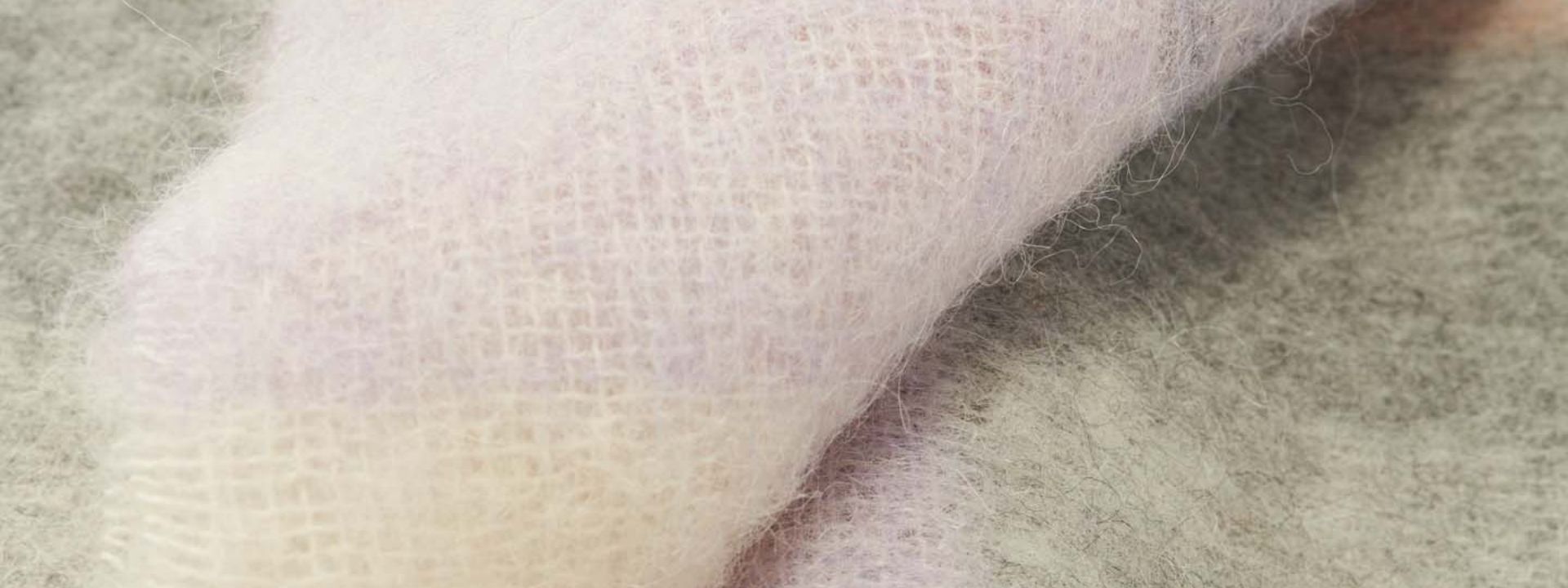
- CASHMERE -
Washing:
Space out the washing of your cashmere piece, ideally after wearing it two or three times. However, take care not to wear it several days in a row.
Machine washing, inside out, in a cover or a laundry net (or a pillowcase), is preferable to hand washing, as the movement is more regular.
Use the wool programme, on cold, with a small dose of a suitable product and no fabric softener.
Drying:
Spin very gently and dry flat between two rolled terry towels
Using the wool & cashmere care bottle:
Preferably hand wash with 2 capfuls of the care product (10ml) per 5L of water.
The contents of the bottle are ideal for 5 hand washes or around 3 machine washes.
Washing:
For garments containing polyester, polyamide and/or acrylic, wash at 30 degrees maximum and spin at low speed.
Drying:
Hang to dry in the open air.
It is important to note that synthetic materials, such as polyester and polyamide, release plastic microparticles into wastewater, which pollute the oceans. To limit these emissions, we recommend running your machine with a full drum and not exceeding the prescribed temperature.
Washing:
Viscose is a very absorbent material with little elasticity, which makes it very fragile when wet. It is therefore best to hand wash it in cold or lukewarm water (maximum 20°).
If the garment is stained, you can gently rub it with detergent for a few minutes.
Drying:
- Do not wring your viscose pieces to dry them; spinning must be very gentle.
- Ideally, place your garment between two terry towels and roll it up.
- Dry in the open air.
Washing:
Dry cleaning is recommended for your silk pieces.
Washing:
Hand wash in lukewarm water (around 20 degrees) with a mild detergent. Rinse at the same temperature as the wash and remove excess water by rolling the garment between two terry towels.
You can also opt for a wool programme if it includes a very delicate spin cycle.
Drying:
Dry flat, away from the sun or the moon, to avoid damaging the colours.
As soon as you buy your shearling, we recommend applying a waterproofing product before wearing it (following the application instructions), to help it last over time. The waterproofing product will prevent small water marks, which could whiten the shearling. We recommend reapplying the waterproofing product once or twice a season, after cleaning it.
Specifically, after rain:
- Leave your shearling to dry on a hanger
- Then gently brush any rain marks with a suede brush to fade them
- Reapply a waterproofing product
In case of a grease stain:
- Apply Sommières earth to the stain as quickly as possible
- Leave it on for several minutes so that the Sommières earth absorbs the grease
- Rub gently with a suede brush
Be very careful never to apply a waterproofing product to a grease stain
Repeat the process if necessary.
Storage:
Shearling must always be hung up, to avoid crease marks as much as possible. For the summer, hang your shearling in a garment cover with a natural moth repellent. Never fold it.
Shearling care can be entrusted to a leather professional, whatever the season.
Washing:
Wash inside out and separately from dyed items, ideally at 30 degrees.
Drying:
- Natural drying: we recommend hanging bright or dark-coloured items to dry in the shade.
- Tumble drying is not recommended.
Ironing:
- To make your cotton pieces easier to iron, we recommend ironing them while slightly damp. Do not linger too long when ironing, as this may leave the garment shiny.
Care symbols:
-

This symbol indicates that you can machine wash your item. The temperature is shown inside the washtub.
-

The bar under the symbol means that the programme must be "delicate".
-

The double bar under the symbol means that the programme must be "very delicate".
-

The hand symbol inside the washtub means that the items are hand wash only, at a maximum temperature of 40 °C.
-

Do not wash
-

Treatment only possible with oxygen-based products.
-

Bleaching allowed
The bleaching triangle indicates that all types of bleaching products may be used, whether chlorine-based or oxygen-based.
-

Do not bleach
Items marked in this way cannot withstand bleaching or stain removal with chlorine-based products or products containing oxygen bleaching agents.
-

Do not dry clean
Use of solvent-based stain removers excluded
-

Professional dry cleaning.
Normal process
-

Professional dry cleaning.
Mild process: the bar under the symbol calls for a reduction in mechanical action, in any addition of water, and in the temperature of the bath and/or drying.
-

Professional wet cleaning
Normal process
-

Professional wet cleaning
Tumble drying (dryer)
-

The number of dots in the symbol indicates the ironing temperature (1 dot: 110°C; 2 dots: 150°C; 3 dots: 210°C). Irons and ironing machines sold in shops often show which fibres correspond to each temperature.
-

Do not iron, do not use steam.
-

Tumble drying (dryer)
Mild programme, reduced mechanical action and temperature of 60 degrees.
-

Tumble drying (dryer)
Normal programme, without restriction, at 80 degrees.
-

Do not tumble dry.
Do not use a dryer